
Working With The Power of Veves in Haitian Vodou
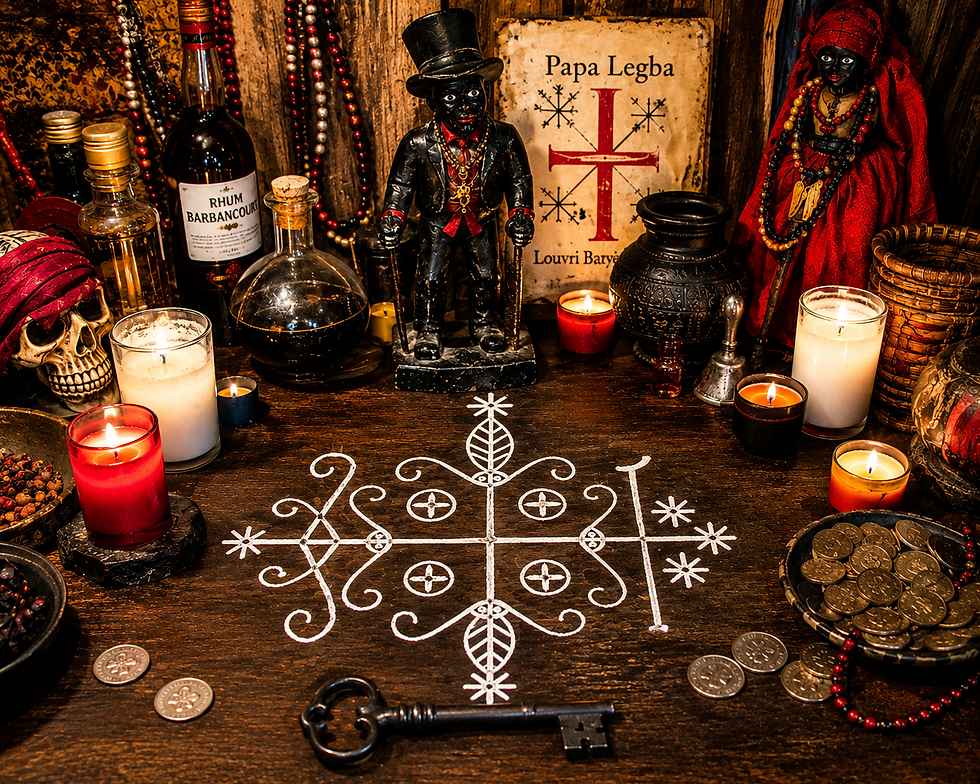
Veves are among the most recognizable and meaningful symbols found within Haitian Vodou. Carefully drawn with flowing geometric lines and intricate patterns, each veve represents a specific lwa (also spelled loa), the spiritual beings who serve as intermediaries between humanity and the Divine.
Far more than decorative artwork, veves play an important role in Vodou ceremonies, where they symbolize the presence of a particular lwa and help focus prayer, devotion, and ritual observance. Every veve is unique, reflecting the attributes, personality, and responsibilities of the spirit it represents.
What Is a Veve?
A veve is a sacred ritual design created during Vodou ceremonies. Traditionally, practitioners draw these symbols on the ground using materials such as cornmeal, flour, ash, powdered eggshell (cascarilla), or other natural substances.
Each veve serves as the symbolic signature of a specific lwa. During ceremonies, the completed design marks a sacred space where prayers, songs, offerings, and ceremonies are dedicated to that spirit.
Because each lwa governs different aspects of life, every veve carries its own symbolism and purpose.
The Meaning Behind Veves
Every line, curve, and geometric element within a veve has symbolic significance. Some incorporate crosses, hearts, serpents, ships, swords, keys, stars, or agricultural tools that reflect the nature of the lwa they honor.
Rather than functioning as magical drawings on their own, veves represent a visual language that expresses devotion and establishes a ceremonial connection with the spirits within the Vodou tradition.
Common Veves and Their Symbolism
These Veves are the most widely used Veves in Voodoo and remains the most powerful to summon the Lwas (Loas) for assistance.
Papa Legba "The Road Opener"
Papa Legba is widely recognized as the guardian of crossroads and communication. His veve is traditionally drawn at the beginning of many ceremonies because he is believed to open the spiritual pathways through which communication with the other lwa becomes possible.

His symbols often include keys, crosses, walking canes, or crossroads imagery representing access, guidance, and opportunity.
Erzulie Freda "Goddess of Love & Romance"
Ezili Freda is one of the most beloved and honored lwa in Haitian Vodou, associated with love, beauty, abundance, elegance, and the finer pleasures of life. She is revered as a powerful force in matters of romance, relationships, self-worth, and emotional fulfillment, inspiring compassion, affection, and prosperity. While she embodies grace and luxury, Ezili Freda also reflects the emotional depth of the human experience, reminding us that love often brings both profound joy and heartfelt sorrow. Her gentle yet powerful presence encourages people to open their hearts while embracing both the blessings and challenges that accompany love.

Her veve frequently contains graceful curves and heart-like designs reflecting affection, elegance, and emotional connection.
Ezili and her counterpart Ezili Dantor are some of the most beloved lwa within Haitian Vodou.
Damballah "The Supreme Creator"
Damballah, also known as Dambala or Damballah-Wedo, is revered as one of the oldest and most honored lwa in Haitian Vodou. Often represented by the sacred serpent, he is regarded as the divine creator who brought order to the universe and established the foundations of life. Damballah embodies purity, peace, wisdom, and harmony, and is associated with creation, spiritual renewal, and the balance that sustains all living things. His presence is believed to bring tranquility, clarity, and divine blessings to those who seek his guidance.

Represented by the sacred serpent, Damballah symbolizes creation, wisdom, peace, and purity. His veve commonly incorporates intertwining serpent imagery that reflects life, renewal, and spiritual balance.
Baron Samedi "Leader of The Guede"
Baron Samedi is one of the most recognizable and influential lwa in Haitian Vodou, serving as the guardian of the dead and the leader of the Guédé spirits. He is closely associated with cemeteries, ancestral spirits, transformation, and the natural cycle of life and death. He is also a protector.
As the keeper of the boundary between the physical and spiritual worlds, Baron Samedi is believed to oversee the passage of souls while also symbolizing rebirth, vitality, and the continuation of life. Known for his commanding presence, sharp wit, and distinctive personality, he is honored as both a protector of the departed and a powerful force of spiritual authority.

His veve frequently incorporates crosses and cemetery symbolism reflecting his role as guardian of the dead.
The Importance of Veves
For practitioners of Haitian Vodou, veves are sacred ceremonial symbols that preserve centuries of religious tradition and cultural heritage. They represent devotion, reverence, and spiritual identity rather than simple decorative artwork.
Each veve reflects the unique qualities of the lwa it represents and serves as an enduring reminder of the rich spiritual traditions that continue to be practiced throughout Haiti and the Haitian diaspora today.


Comments